01
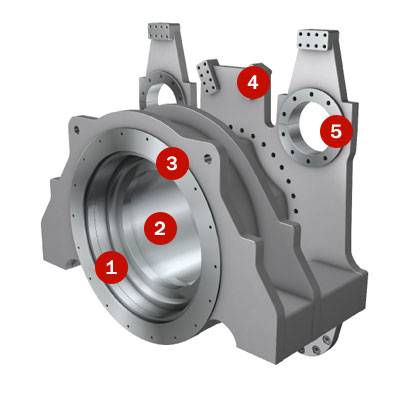
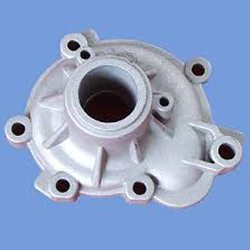
Gearbox housings
Rigid bodies with machined bores, mounting faces and internal features.
Custom industrial components
Drawing-led cast housings, covers, flanged bodies and engineered aluminium components for industrial equipment, machinery and OEM assemblies.
Flexible OEM manufacturing
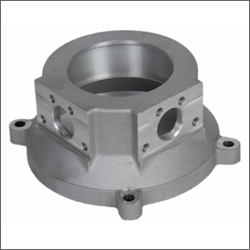
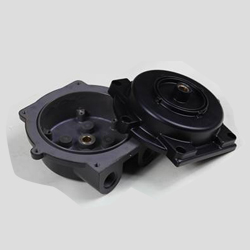
General aluminium gravity die casting covers the wide range of engineered components that do not fit a single product family. Typical enquiries include machinery housings, motor and gearbox parts, covers, brackets, flanged bodies, equipment hardware and application-specific OEM components.
Each part is assessed independently. Geometry, alloy, annual demand, tooling, machined features, surface treatment and inspection requirements determine the practical manufacturing route.
Representative range
These categories illustrate capability. Final component definition always comes from the approved customer drawing.
Rigid bodies with machined bores, mounting faces and internal features.
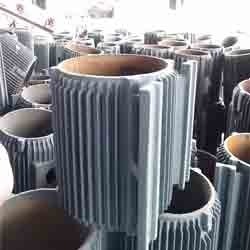
Frames, end covers and related cast parts for rotating equipment.
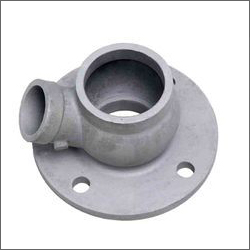
Custom bodies with mounting lugs, ports and machined interfaces.
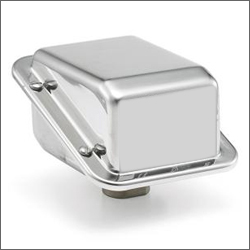
Protective bodies and covers shaped around assembly and mounting needs.
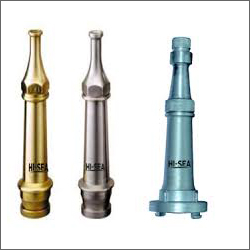
Application-specific equipment parts manufactured to controlled drawings.
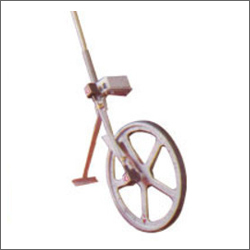
Cast wheels and structural components for measuring equipment.
Design for manufacturability
Early drawing review can identify casting and machining considerations before the component is released for production.
Explore our manufacturing expertise →Wall thicknessAvoid unnecessary section changes and identify genuinely functional heavy areas.
Draft and releaseProvide practical draft on die-release surfaces where the design permits.
Radii and transitionsUse smooth transitions to support filling and reduce local stress concentration.
Machining allowanceClearly identify finished faces, bores, threads and dimensional datums.
Alloy and performanceState the alloy, service environment and functional requirements.
Value engineering
Where annual volume and geometry justify dedicated tooling, an existing sand-cast component may be reviewed for possible conversion to gravity die casting. The objective may be improved repeatability, surface condition, production rate or reduced downstream work.
Conversion is not automatic. Part geometry, alloy, size, tolerances, quantities, tooling investment and validation requirements must be considered together.
Request a conversion review →Project workflow
A controlled process keeps technical requirements connected to tooling, casting and machining decisions.
Evaluate the drawing, sample, alloy, quantity, application and critical features.
Define the die concept, casting route, trimming and machining operations.
Produce initial components and evaluate them against agreed requirements.
Move the approved part into planned batch production and dispatch.
Component gallery
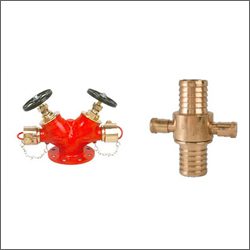
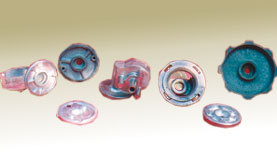
Images are representative; current tooling ownership and product specifications must be confirmed for each enquiry.
For an accurate quotation
A detailed RFQ allows the casting, tooling and machining scope to be assessed together.
Frequently asked questions
Practical information for buyers, designers and vendor-development teams.
We manufacture custom housings, covers, gearbox and motor-related components, flanged bodies, brackets, fire-safety parts, measurement hardware and other industrial components to approved drawings.
The stated indicative single-piece range is from a few grams up to 20 kg. Feasibility depends on geometry, alloy, tooling, quality requirements and quantity.
Yes. Suitable repeat parts can be reviewed for possible conversion to gravity die casting, subject to drawing, volume, alloy, geometry and tooling feasibility.
Provide the drawing and available 3D model, alloy, annual and batch quantities, critical dimensions, machining, finishes, tests and delivery location.
Custom casting enquiry
Share the drawing, alloy, expected quantity and application. Our team will review feasibility and respond with the next practical step.